
Skip to content

THE PROBLEM

Tons of good food disappears every day.
Not because it went bad. Because the clock ran out.


Restaurants close. Bakeries shut down for the night. Grocers restock the shelves. And perfectly edible food — food that took water, energy, labor, and land to produce — gets thrown in the trash. Every single day, in cities across America.

This isn't a small problem. It's one of the biggest drivers of climate change, economic waste, and hunger that nobody talks about at the dinner table.

THE SCALE OF IT
The numbers are staggering. 

40%
of all food produced in the US is wasted
$408B
spent annually on food that never gets eaten
1 in 8
Americans are food insecure right now
8%
of global greenhouse gas emissions come from food waste


"Diverting just 15% of currently wasted food would reduce the number of food insecure Americans by 50%."

TWO PROBLEMS, ONE GAP

Waste and hunger exist side by side

This is what makes food waste so painful. It's not happening in isolation. On the same block where a restaurant is throwing out perfectly good meals, people in that same community are going to bed hungry. The food exists. The need exists. What's missing is the bridge.


FOOD WASTE

80M tons

of food wasted in the US every year — enough to fill 700 football stadiums


FOOD INSECURITY 

38M

Americans experienced food insecurity in 2020, including 12 million children


WHERE IT HAPPENS

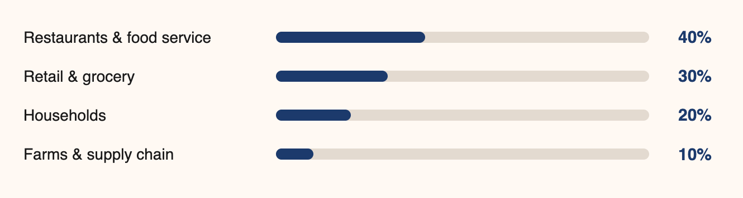
Food waste isn't just a household problem


Most people think of food waste as forgetting about leftovers in the fridge. But the majority of wasted food in America happens long before it reaches your home — at the farm, in transit, in grocery stores, and in restaurants. 
 

Screenshot 2026-05-18 at 10.05.59 PM


Restaurants and food businesses are on the front line of this problem. And they're also the fastest place to make a dent — because the food is already prepped, it's still fresh, and it just needs somewhere to go before closing time.